
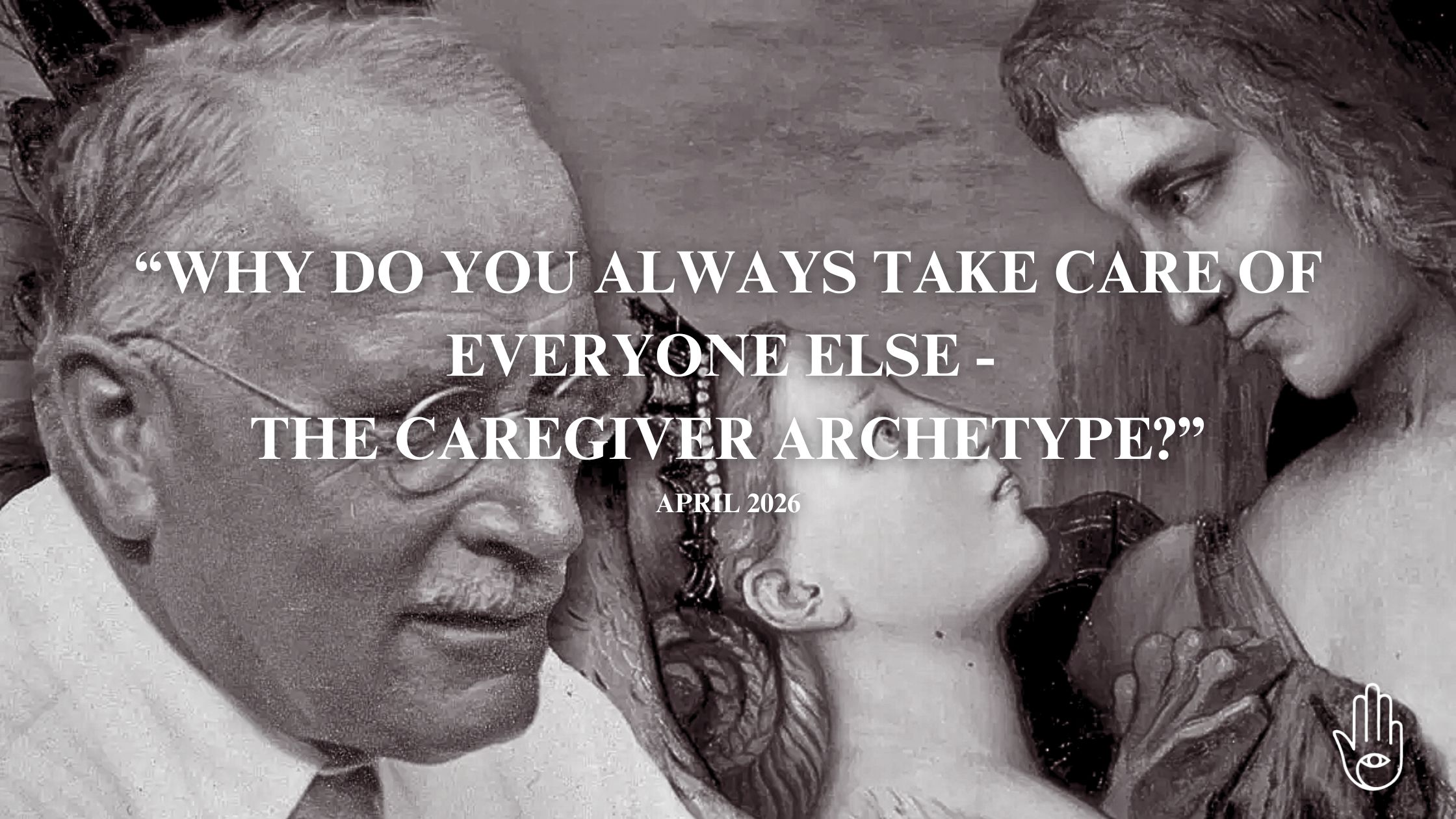
Have you ever heard of: ‘The caregiver archetype’?
This is why you continue to take care of everyone else, before yourself. Most people will defend this action and I totally get it. But if this is correct, why are we asked to fit our own oxygen mask first on a plane, before others?
This is what we forget; ‘You cannot give from an empty cup’.
Children learn by what you do as a parent, rather than what you say. Every minute of the day we are given a choice. We all have the same amount of days in a week and hours in a day. Every choice we make takes us either closer to our goal or further away.
Your behaviour is shaped by your core values, if your health and well being are important, you will make sure there is time to do movement and food prep. If not you will continue on the same journey prioritising everything else.
Archetypes: Origins
The idea of “archetypes” traces back to ancient Greece, where the term meant “original pattern” or “primordial model”. Swiss psychiatrist Carl Jung further leveraged this concept within his influential theories concerning the human psyche and the depths of the collective unconscious.
Within our shared consciousness, Jung uncovered 12 fundamental archetypes that reflect core aspects of the human experience. Jung revealed that each of us channels these 12 archetypes to varying degrees. While one may shape our dominant personality traits, others still reside within us, guiding our behaviours, relationships and personal narratives on subtle levels. One of which is the caregiver archetype.
Caregiver archetype traits are nurturing, selfless and compassionate. Caregivers prioritise the well-being of others and are driven by a deep desire to provide support and care. They have a strong instinct to protect and provide comfort to those who are vulnerable. Jobs that are included are nurses, teachers, parents, social workers, therapists and many other similar fields.
What ever your role in life, we should always be walking the walk and talking the talk. If the method of health that you are doing is not working, why should anyone take your advice seriously. When the pain teacher shows up, physically, mentally, emotionally or spiritually, its a golden opportunity to change or ignore.
Caring for Ourselves
It is always easier to care for others than it is to care for ourselves. So much of our suffering begins internally with self judgement, fear, comparison, resentments and old wounds playing in the background like a broken record on repeat. Our inner conflicts become the lens through which we see the world. When you heal the lens, your world begins to change. When we are peaceful and heart centred, nothing outside can steal your light. Your inner world creates an untouchable outer presence and when harmony exists inside you it shines outwardly.
The late holocaust survivor Dr.Edith Edgar wrote on self neglect in her 12 invaluable lessons to free your life; ‘You Are the Only One You’re Going to Have For a Lifetime’. One of our first fears in life is of abandonment. Thus we learn early how to get the A’s: attention, affection, approval. We figure out what to do and whom to become to get our needs met. The problem is not that we do these things—it’s that we keep doing them. We think we must in order to be loved.
‘You don’t manifest the life you want, you behave your way into it’ – Jamie Alderton
Bibliography
Paul Chek – media
Dr.Edith Edgar – media
Matthew Sorenson – media
David Ji – media